Quick Answer
The best way to get from Kansai Airport to Kyoto Station for most travelers is the JR Haruka limited express (75–80 minutes, ¥3,300–3,900, free with JR Pass). It's direct, comfortable, and runs every 30 minutes. If you're on a budget, the airport limousine bus costs ¥2,600 and takes 90–120 minutes, with underfloor luggage storage. The cheapest rail option (Nankai + Osaka Metro + JR local) costs about ¥1,800 but requires two transfers and takes around 2 hours. Taxis are expensive (¥32,000–40,000) and only recommended for groups or those with mobility issues.
JR Haruka Limited Express (The Direct & Fastest)
The JR Haruka limited express is the undisputed champion for Kansai Airport to Kyoto Station transfers. It's a direct train that whisks you from the airport island to the heart of Kyoto in about 75 minutes. The trains are modern, with comfortable seating, overhead luggage racks, and power outlets. For holders of the Japan Rail Pass, the ride is completely free. Even without a pass, the fare (¥3,630 for non-reserved) is reasonable for the speed and convenience.
| Transport Option | Travel Time | Approximate Cost | Luggage Space | Best For |
|---|---|---|---|---|
| JR Haruka (non-reserved) | 75-80 min | ¥3,630 (¥3,300 w/ discount ticket) | Good (overhead racks, limited floor space) | Speed, JR Pass holders, direct connection |
| Budget Rail (Nankai + JR) | 2 hours | ¥1,800 | Limited (crowded local trains) | Backpackers, budget travelers |
| Airport Limousine Bus | 90-120 min | ¥2,600 | Excellent (undercarriage storage) | Families, large luggage, simplicity |
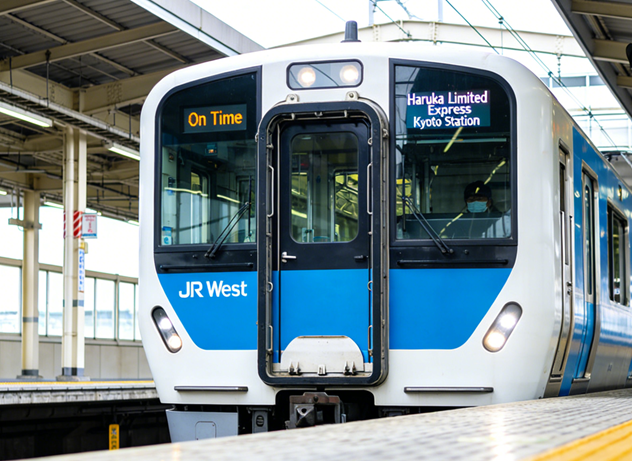
How to Catch the Haruka at KIX
After clearing customs, follow the signs for "Railways" to the second floor. Cross the walkway to Kansai Airport Station. The JR ticket office (Midori-no-madoguchi) is on your left. If you have a JR Pass voucher, exchange it here—queues can be 20–30 minutes. If you're buying a ticket, use the vending machines (English option). The Haruka usually departs from platforms 1–4. Non-reserved cars are fine on weekdays, but during holidays, reserve a seat at the ticket office to guarantee luggage space. The train stops at Tennoji and Shin-Osaka before reaching Kyoto.
Arrival at Kyoto Station
The Haruka arrives at Kyoto Station on the lower level (platforms 30–31). You're now in the heart of Kyoto, with easy access to subways, buses, and taxis. The station itself is a hub with shopping, restaurants, and tourist information. If you're continuing to other parts of Kyoto, follow signs for the Karasuma or Hachijo exits. The bullet train (Shinkansen) platforms are also accessible from here.
Reality Check: Seat Reservations and Peak Times
During peak travel seasons (Golden Week, Obon, autumn leaves), the Haruka can fill up. Non-reserved cars might become standing room only. I've seen travelers with suitcases struggle to find a spot. If you're arriving during a busy period, spend the extra 10 minutes to reserve a seat—it's free with the JR Pass and a small fee (¥530) without. The peace of mind is worth it.
Budget Rail Route: Nankai + Osaka Metro + JR Local
If you're watching your yen and don't mind a couple of transfers, the budget rail route can get you to Kyoto Station for as little as ¥1,800. This route uses the Nankai Line from KIX to Namba, the Osaka Metro Midosuji Line to Shin-Osaka, and then a JR local or rapid train to Kyoto. Total travel time is about 2 hours, depending on connections. It's not as comfortable as the Haruka, and you'll be dealing with stairs and crowds, but it's a viable option for backpackers.
Step-by-Step: KIX to Kyoto via Nankai and JR
Step 1: From Kansai Airport Station, take the Nankai Line airport express (not the rapi:t) to Namba (45 minutes, ¥930). Follow signs for the Osaka Metro Midosuji Line. Step 2: Take the Midosuji Line from Namba to Shin-Osaka (15 minutes, ¥290). At Shin-Osaka, exit the subway and follow signs for JR lines. Step 3: Board a JR Kyoto Line train (local, rapid, or special rapid) bound for Kyoto (25–30 minutes, ¥580). The special rapid is fastest, making fewer stops. Total cost: ¥1,800. You can use an IC card for all legs.
Who Should Choose This Route?
This route is for budget-conscious travelers with light luggage and a sense of adventure. It's also a good option if you want to experience Osaka's transit system. However, it's not recommended for: families with children, anyone with large suitcases, elderly travelers, or those arriving late at night. The transfers involve stairs and long walks, especially at Namba and Shin-Osaka. I've done this route with a backpack and it was fine; with a roller bag, it was a workout.
A Common Example of a Real-Life Mistake
A friend once arrived at KIX with a 25kg suitcase and decided to save money by taking this budget route. At Namba, he couldn't find an elevator and ended up dragging his suitcase up two flights of stairs. At Shin-Osaka, he got lost in the maze between the subway and JR lines. He missed his connection and waited 20 minutes for the next train. What should have been a 2-hour trip took nearly 3.5 hours, and he arrived exhausted. He swore he'd take the Haruka next time. Sometimes saving ¥1,800 isn't worth the hassle.
Airport Limousine Bus: The Luggage-Friendly Choice
The Kansai Airport Limousine Bus is the go-to option for families, groups, or anyone with large suitcases. Buses depart from each terminal every 20–40 minutes and take 90–120 minutes to reach Kyoto Station (Hachijo Exit). They have underfloor luggage storage, so you don't have to haul bags onto trains. The fare is ¥2,600 for adults, ¥1,300 for children. The buses are comfortable, with reclining seats and a restroom. During peak hours, traffic on the Hanshin Expressway can add 20–30 minutes, but for many, the convenience outweighs the slower speed.
Bus Details: Where to Board and Buy Tickets
At Kansai Airport, follow signs for "Limousine Bus" to the bus stop areas outside arrivals. Tickets can be purchased from vending machines (cash or credit card) or at the counter. The first bus departs around 6:30 AM, the last around 11:00 PM. Buses to Kyoto Station stop at both the Hachijo and Karasuma exits; most terminate at Hachijo. If you're staying near Kyoto Station, this is a door-to-door solution. For those continuing to other areas, taxis are readily available at the bus stop.
Bus vs. Haruka: Which to Choose?
The bus is cheaper (¥2,600 vs ¥3,630) and easier with luggage. The Haruka is faster (75 min vs 90+ min) and more frequent. If you have a JR Pass, the Haruka is free, so it's a no-brainer. If you're paying out of pocket, consider your priorities. Travelers with mobility issues or large suitcases should lean toward the bus. Solo travelers with a backpack can save time with the Haruka. I've taken both; the bus is my personal favorite when I'm dragging a big bag.
Taxi & Private Transfer: Premium Door-to-Door
Taxi from Kansai Airport to Kyoto Station
A taxi from Kansai Airport to Kyoto Station is the ultimate in convenience—but it comes at a price. The metered fare, including expressway tolls, ranges from ¥32,000 to ¥40,000 (approx. $210–260 USD). The ride takes 90–120 minutes, depending on traffic. Late-night surcharges (after 10:00 PM) add 20–30%. For a group of four, the per-person cost drops to ¥8,000–10,000, which is comparable to a train ticket plus a nice meal. This option is only practical for those with expense accounts, severe mobility issues, or very tight schedules.
Private Transfer Services
Pre-booked private transfers (e.g., MK Taxi, Yasaka, or international booking platforms) offer fixed prices around ¥38,000 for a sedan. The driver meets you at arrivals with a name sign, helps with luggage, and handles tolls. Some companies offer English-speaking drivers. While expensive, this removes all uncertainty and is worth considering if you're traveling with elderly parents or young children. I've used this service for business colleagues—they appreciated the stress-free arrival.
Shared Van Services
Some companies operate shared vans from KIX to Kyoto City for around ¥4,000–5,000 per person. However, they typically drop passengers at major hotels, not specifically at Kyoto Station. You might need a short taxi from the drop-off point. It's a middle-ground option but adds time. I'd only recommend this if your hotel is one of the drop-off points and you're on a tight budget but have too much luggage for trains.
Detailed Route: Kansai Airport to Kyoto Station Station-by-Station
Here are the station-by-station breakdowns for the two main rail routes. This helps you track your progress and know when to get off.
JR Haruka Route: KIX → Kyoto Station (Direct)
- Kansai Airport Station – Board JR Haruka limited express (platforms 1–4).
- Hineno Station (pass).
- Otori Station (pass).
- Kansai Airport Line continues...
- Tennoji Station (stop – 35 min from KIX).
- Shin-Imamiya Station (pass).
- Shin-Osaka Station (stop – 55 min from KIX).
- Kyoto Station (terminus – 75–80 min from KIX).
Budget Rail Route: KIX → Namba → Shin-Osaka → Kyoto
- Kansai Airport Station – Board Nankai Line airport express.
- Izumisano Station.
- Kishiwada Station.
- Sakai Station.
- Shin-Imamiya Station.
- Namba Station – Alight. Transfer to Midosuji Subway.
- Shinsaibashi Station (Midosuji Line).
- Umeda Station (skip – train goes to Shin-Osaka).
- Shin-Osaka Station (subway) – Transfer to JR lines.
- JR Shin-Osaka Station – Board JR Kyoto Line (local/rapid).
- Osaka Station (first stop on JR Kyoto Line).
- Tsukamoto Station.
- Amagasaki Station.
- Takatsuki Station (rapid may skip).
- Kyoto Station – Arrival.
Kansai Airport to Kyoto Station Route Map
The map below shows the route from Kansai Airport to Kyoto Station. The JR Haruka takes a direct line through Osaka, while the budget route requires transfers in Namba and Shin-Osaka.
View the route on Google Maps: KIX to Kyoto Station.
The distance from Kansai Airport to Kyoto Station is approximately 95 km (59 miles). The train ride crosses Osaka Bay and passes through the urban centers of Osaka before arriving in Kyoto.
Fares, IC Cards, and Tickets
| Transport Option | Base Fare | Limited Express / Supplements | Total Cost (Approx.) | IC Card OK? |
|---|---|---|---|---|
| JR Haruka (non-reserved) | ¥2,330 (KIX-Kyoto) | ¥1,300 (Haruka limited express) | ¥3,630 | No (need paper ticket for limited express) |
| Budget Rail (Nankai + Subway + JR) | ¥930 + ¥290 + ¥580 | None | ¥1,800 | Yes (tap at all gates) |
| Airport Limousine Bus | ¥2,600 | None | ¥2,600 | No (ticket required) |
| Taxi | Meter + Tolls | N/A | ¥32,000–40,000 | No (cash/card) |
IC Cards: ICOCA, Suica, and You
IC cards are rechargeable smart cards that work on almost all trains and subways in Kansai. You can buy an ICOCA at the JR ticket machines at KIX (¥2,000, includes ¥500 deposit). It works on Nankai, Osaka Metro, and JR local trains. For the JR Haruka, you cannot use an IC card alone; you must buy a limited express supplement ticket. However, for the budget route, you can tap your IC card at every gate without buying individual tickets. The Apple Wallet Suica (digital) works exactly the same and can be recharged with a credit card – a lifesaver for iPhone users.
JR Pass Considerations
If you have a Japan Rail Pass, the JR Haruka is 100% covered, including the limited express fee. You must exchange your voucher at the JR Ticket Office at KIX – allow 30–45 minutes for this. Reserve a seat on the Haruka for free; it ensures you have a place for your luggage. The JR Pass does not cover the Nankai Line or Osaka Metro, so the budget route would be out-of-pocket.
A Common Example of a Real-Life Mistake: A traveler with a JR Pass arrives at KIX and heads straight to the Haruka platform without reserving a seat. The train is full, and he has to stand for 75 minutes with his suitcase. If he had reserved a seat when exchanging his pass, he'd have had a comfortable ride. Always reserve – it's free and saves hassle.
Traveler Experience: The Gateway to Kyoto
Landing at Kansai Airport is often the start of a magical Japan trip. The airport is efficient, signs are clear, and the transport options are well-organized. The choice you make here sets the tone for your arrival. Will you glide into Kyoto on the sleek Haruka, or will you navigate Osaka's subway labyrinth to save a few yen?
The First-Timer's Haruka Experience
Most first-timers choose the JR Haruka, and it rarely disappoints. The train is comfortable, the seats are wide, and watching the urban landscape shift from industrial to residential is fascinating. The arrival at Kyoto Station is dramatic – the sheer scale of the building, the crowds, the futuristic architecture. It's a moment that says, "You've arrived." From there, you're minutes away from your hotel or onward connections.
The Budget Route: A Test of Mettle
I've taken the budget route a few times when I was younger and more adventurous. It's doable, but it's not relaxing. Namba Station is a maze; even with Google Maps, you'll likely take a wrong turn. Shin-Osaka's transfer between subway and JR is a long walk. By the time you reach Kyoto, you've earned your discount. It's a rite of passage for backpackers, but I wouldn't recommend it to anyone with a suitcase or a tight schedule.
The Bus: Underrated Comfort
The limousine bus is often overlooked, but it's my secret weapon. With underfloor luggage, you don't have to wrestle with bags. You can relax, use the WiFi, and even nap. Traffic can be unpredictable, but the comfort trade-off is worth it. I've recommended the bus to families and friends, and they've always thanked me.
A Common Example of a Real-Life Mistake: A couple arrives at KIX with two large suitcases and two carry-ons. They decide to take the Haruka because it's "faster." At Kyoto Station, they struggle to find the exit with their bags, then realize their hotel is a 15-minute walk. They end up taking a taxi from the station (¥1,500). If they'd taken the bus, they'd have been dropped at Hachijo Exit and could have taken a shorter taxi. Sometimes "faster" isn't the whole story.
Practical Tips & Advice for KIX to Kyoto Station
- With large luggage: Take the limousine bus. It has underfloor storage and avoids train crowds. If you prefer the Haruka, reserve a seat to guarantee luggage space.
- First-time visitor tip: Download Google Maps offline for Kyoto. It works without data and shows train platforms and bus stops.
- Late night arrival (after 10:00 PM): The last Haruka departs around 10:30 PM. After that, take the limousine bus (last around 11:00 PM). If both are gone, a taxi is your only option.
- Early morning departure to KIX: The first Haruka from Kyoto departs ~6:30 AM. If your flight is before 9:30 AM, consider staying near Kyoto Station or KIX the night before. The limousine bus also starts around 6:00 AM.
- With kids: The bus is easiest. If taking the Haruka, use the elevator at Kyoto Station (near the central ticket gates).
- Cost-saving tip: The budget rail route is cheapest but only suitable for backpackers. For most, the bus offers the best value.
- Time-saving tip: JR Haruka is fastest. Buy tickets online or use vending machines to avoid queues.
- Group travel (3-4 people): Compare taxi cost (¥32,000–40,000) with train tickets. Split 4 ways, a taxi is ¥8,000–10,000 per person, which is more than the Haruka but offers door-to-door service. Decide based on budget.
- Buying tickets: For Haruka, use vending machines (English) to avoid ticket office queues. For bus, buy at the counter or machine.
- Weekend vs weekday: Trains and buses are busier on weekends, but the Haruka still has seats. Book ahead during holidays.
- Hotel location: If your hotel is near Kyoto Station, any option works. If it's elsewhere, consider proximity to subway/bus from the station.
- Return trip: From Kyoto Station to KIX, take the Haruka or bus. Allow 2.5–3 hours total for check-in.
- Mobile apps: "Japan Travel" by Navitime, Google Maps, and "HyperDia" are reliable. "JapanTaxi" app can hail cabs.
- Rainy season (June-July): The bus is best to avoid getting wet during transfers. Trains are fine but platforms are uncovered.
- Hot season (August): All options are air-conditioned. Stay hydrated.
- SIM cards/WiFi: Rent a pocket WiFi at the airport or buy a data SIM at 7-11. Essential for navigation.
- Language: Most signs are in English. Station staff speak basic English.
- Safety: Japan is extremely safe. Keep your belongings close, but don't stress.
- Bargaining: Doesn't exist. Pay the fare shown.
- Tipping: Not practiced. Don't tip taxi drivers or bus drivers.
Map showing route from Kansai Airport to Kyoto Station via the Haruka line and alternate routes.
Frequently Asked Questions: Kansai Airport to Kyoto Station
What is the best way to get from Kansai Airport to Kyoto Station?
For most travelers, the best way is the JR Haruka limited express. It takes 75–80 minutes, costs ¥3,300–3,900 (free with JR Pass), and runs directly to Kyoto Station with no transfers. It's comfortable, has luggage space, and departures every 30 minutes. If you're on a tight budget, the Nankai + JR local route via Osaka is cheaper but involves transfers.
Is there a direct train from Kansai Airport to Kyoto Station?
Yes, the JR Haruka limited express provides a direct connection from Kansai Airport to Kyoto Station. No transfers are needed. It's the only direct train service; all other rail options require at least one change.
How far is Kansai Airport from Kyoto Station?
Kansai Airport is approximately 95 kilometers (59 miles) from Kyoto Station. The direct train covers this distance in about 75 minutes. By road, it's about 100 km and takes 90–120 minutes by car or taxi.
How much is a taxi from Kansai Airport to Kyoto Station?
A taxi from Kansai Airport to Kyoto Station costs ¥32,000–40,000 (approx. $210–260 USD), including expressway tolls. The ride takes 90–120 minutes. This option is only practical for groups of 3–4 splitting the fare or for travelers with mobility issues.
Is the JR Pass valid for the trip to Kyoto Station?
Yes, an activated Japan Rail Pass covers the JR Haruka limited express from KIX to Kyoto Station completely. No additional payment is needed. You can reserve a seat for free at the JR ticket office.
What is the cheapest way from Kansai Airport to Kyoto Station?
The cheapest rail route is: Nankai Line from KIX to Namba (¥930) → Osaka Metro Midosuji Line to Shin-Osaka (¥290) → JR Kyoto Line local or rapid to Kyoto Station (¥580). Total cost about ¥1,800, but involves two transfers and about 2 hours. For a simpler budget option, the airport limousine bus costs ¥2,600 and takes 90–120 minutes.
Is it safe to take a taxi from Kansai Airport to Kyoto Station at night?
Yes, licensed taxis at KIX are safe and metered. Late-night arrivals after 10:00 PM have fewer train options, so a taxi is reliable but expensive. A more affordable alternative is the last limousine bus to Kyoto Station (around 11:00 PM).
What is the best option for early morning departure from Kyoto Station to KIX?
Take the JR Haruka limited express from Kyoto Station to Kansai Airport. The first Haruka departs around 6:30 AM, reaching KIX by 7:45 AM. For flights before 9:30 AM, consider staying near Kyoto Station or KIX the night before. The limousine bus also starts around 6:00 AM.
Are there luggage lockers at Kyoto Station?
Yes, Kyoto Station has thousands of coin lockers in various sizes, located near the Hachijo and Karasuma exits. They fill up quickly on weekends and holidays, so arrive early or use a luggage storage service if needed.
Can I use an IC card (ICOCA/Suica) for the trip?
For the JR Haruka limited express, you need a separate limited express ticket; an IC card alone won't cover it. However, for the budget route using Nankai, Osaka Metro, and JR local trains, you can tap your IC card at every gate. ICOCA cards are available at KIX vending machines.
Is there free WiFi at Kansai Airport for booking transport?
Yes, Kansai Airport offers free WiFi (SSID: KIX-Free-WiFi). It's reliable for checking train schedules or booking bus tickets. For continuous navigation, rent a pocket WiFi or buy a prepaid SIM at the airport.
Which is better: JR Haruka or airport limousine bus?
The JR Haruka is faster (75 min vs 90–120 min) and more frequent. The bus is cheaper (¥2,600 vs ¥3,630) and easier with large luggage because of underfloor storage. Choose Haruka for speed and JR Pass value; choose bus for budget and luggage convenience.