Quick Answer
The best way to get from Kansai Airport to Koyasan (Mount Koya) for most travelers is the Nankai Limited Express Rapi:t + Nankai Koya Limited Express combination. Total journey time is about 2.5–3 hours, cost ¥2,900–3,500. From Kansai Airport, take the Rapi:t to Tengachaya (or Namba), transfer to the Koya Limited Express bound for Gokurakubashi, then ride the cable car to Koyasan Station, and finally take a local bus to your temple lodging. If you're doing a round trip, the Koyasan World Heritage Ticket offers excellent value including unlimited local buses on the mountain. For a truly special experience, consider the new GRAN天空 luxury observation train (requires separate booking from Namba).
Taxi from Kansai Airport to Koyasan
Taking a taxi from Kansai Airport to Koyasan is the ultimate door‑to‑door luxury, but it comes with a hefty price tag. The distance is roughly 80 km (50 miles) via the Hanshin Expressway and Kinki Expressway, winding into the Wakayama mountains. Depending on traffic and your exact temple lodging, the ride takes 2–2.5 hours. Official taxi fares range from ¥35,000 to ¥45,000. Some drivers may not be familiar with the narrow mountain roads leading to specific temples, so having your destination written in Japanese is essential. For a group of 4, splitting the cost (around ¥9,000–11,000 each) becomes somewhat justifiable, especially if you have lots of luggage.
| Transport Option | Travel Time | Approximate Cost | Best For | Notes |
|---|---|---|---|---|
| Taxi (standard) | 2–2.5 hours | ¥35,000–45,000 | Groups (3‑4 pax), VIP, heavy luggage | Door‑to‑door, 24/7, but pricey |
| Private Transfer (pre‑booked) | 2–2.5 hours | ¥40,000–50,000 | Business, families, guaranteed English | Meet & greet, flight monitoring |
| Nankai Limited Express | 2.5–3 hours | ¥2,900–3,500 | Most travelers, solo, couples | Requires transfers, scenic |
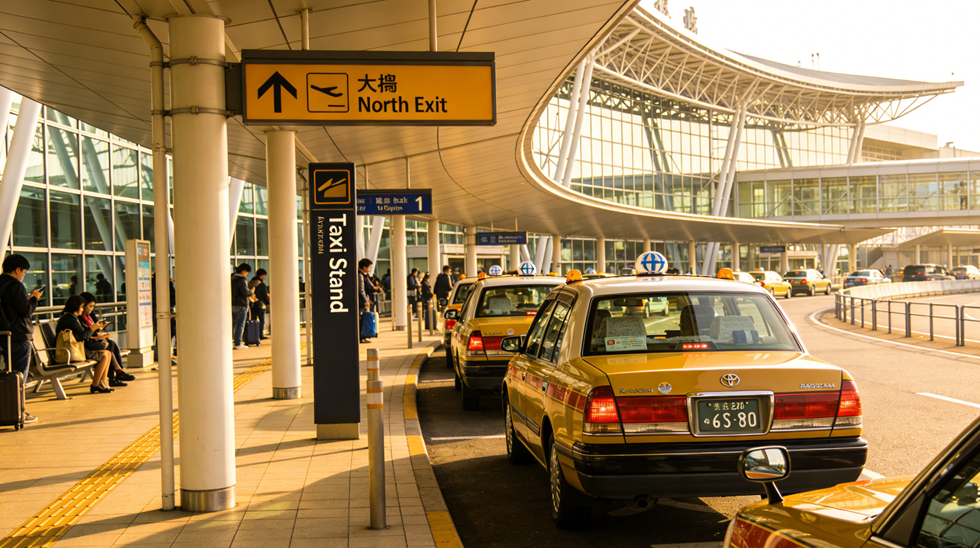
How to Get a Taxi at Kansai Airport
After exiting customs, follow signs to the north or south taxi stands on the first floor of Terminal 1. There's usually an attendant who will ask your destination and direct you to a vehicle. For Koyasan, be prepared to show the address in Japanese. Some drivers may hesitate because of the long distance and mountain driving, but most will accept. Credit cards are accepted in many taxis, but confirm before you start. If you're arriving at Terminal 2 (LCC terminal), take the free shuttle to Terminal 1 first, as the taxi stand there has more cars.
Late Night / Early Morning Taxi
Public transport to Koyasan stops running after the last Limited Express departs Namba around 10:30 PM (arriving Gokurakubashi ~midnight). The last cable car up the mountain is even earlier, around 8:00 PM. If you land after 9:00 PM, you physically cannot reach Koyasan that night—you'll need to stay at a hotel near the airport or in Osaka, and continue the next morning. Taxis are technically available 24/7, but finding a driver willing to go to Koyasan at 2:00 AM is difficult, and the fare will be at the high end (¥45,000+). I once arrived at 10:30 PM and had to stay at a capsule hotel at Kansai Airport—lesson learned.
Nankai Limited Express Route: The Standard Way
The Nankai Electric Railway is the only rail operator serving Koyasan. From Kansai Airport, you have two main options: transfer at Tengachaya or go all the way to Namba. I recommend the Tengachaya transfer because it's quicker and avoids backtracking. Here's the step‑by‑step:
- Kansai Airport Station – Board the Nankai Limited Express Rapi:t bound for Namba. Get off at Tengachaya Station (about 30 minutes, ¥1,450 for the reserved seat).
- Tengachaya – Transfer to the Nankai Koya Line. Ideally, catch the Limited Express Koya bound for Gokurakubashi. If you miss it, you can take an express or local, but you may need to transfer again at Hashimoto. The Limited Express takes about 80 minutes to Gokurakubashi and costs an additional ¥1,150 base fare + ¥520 reserved seat (total ¥1,670).
- Gokurakubashi Station – This is the end of the train line. From here, take the Koyasan Cable Car (5 minutes, ¥480, runs every 20–30 minutes). The cable car is steep and fun—hold onto your luggage.
- Koyasan Station – At the top, you'll find the Rinkan Bus stop. Buses go to the town center, Oku-no-in, and major temple lodgings. A single ride costs about ¥300, or you can buy a 2‑day unlimited pass (covered by the World Heritage Ticket).
Total time: about 2.5 hours if connections line up. Total cost: ¥1,450 + ¥1,670 + ¥480 + ¥300 = ¥3,900 (approx). With the World Heritage Ticket from Namba, it's cheaper—but you have to get to Namba first.
GRAN天空 Luxury Observation Train
If you want to turn your journey into a highlight, consider the GRAN天空 train, launched in 2026. It runs between Namba and Gokurakubashi with panoramic seats, a lounge car, and gourmet food. From Kansai Airport, take the Rapi:t to Namba, then board GRAN天空. Reservations are essential, and prices vary by seat class: Relax Seat around ¥1,700 (plus base fare), Gran Seat with meal plans ¥5,000+. It's a wonderful way to approach the sacred mountain, with big windows framing the forested valleys. I tried it last autumn—the bento box was exquisite, and the lounge car had free sake samples.
Private Transfer from Kansai Airport
Pre‑Booked Chauffeur Service
Several companies offer private transfers from Kansai Airport directly to your Koyasan temple lodging. Prices range from ¥40,000 to ¥50,000 for a sedan (up to 3 passengers). The driver typically meets you at the arrival gate with a name sign, helps with luggage, and drives you up the mountain. This is the most stress‑free option, especially for families with children or travelers with mobility issues. Unlike a regular taxi, the price is fixed in advance, and the driver is experienced with mountain roads.
When a Private Transfer Is Worth It
Private transfers make sense if: 1) You are traveling in a group of 3‑4 (cost per person becomes ¥10,000–12,500). 2) You have large, heavy suitcases (the cable car and bus have limited luggage space). 3) You're arriving very late or early when public transport is limited. 4) You want guaranteed English communication and flight monitoring. I once booked a private transfer for my parents when they visited—they're in their 70s and dragging suitcases up temple steps would have been cruel. The driver even helped them check in at the temple.
Bus & Sightseeing Train Alternatives
Seasonal Direct Bus
During peak travel seasons (autumn foliage: October–November; spring: April–May), a direct highway bus sometimes operates from Kansai Airport to Koyasan. The journey takes about 2.5–3 hours and costs around ¥3,500. It's convenient because it's one‑seat, but schedules are limited—often only one or two buses per day. Buses drop you at the Koyasan Information Center, from where you can walk or take a local taxi to your lodging. Check the official Koyasan website or ask at the airport bus counter. Warning: Outside those seasons, there is no bus. I once arrived in July assuming there'd be a bus—there wasn't. Train it was.
Why I Don't Recommend the JR Route
You might see suggestions to take JR lines to Koyasan. Don't. JR trains do not go to Koyasan. You would have to take JR to Hashimoto, then transfer to the Nankai Line. But JR Hashimoto is a different station from Nankai Hashimoto—they're a 10‑minute walk apart. It's confusing, takes longer, and costs more. Stick with Nankai all the way. The internet sometimes suggests this as an option for JR Pass holders, but the pass doesn't cover the Nankai section, so you'd pay extra anyway. It's a trap.
Detailed Route & All Stops: Kansai Airport → Koyasan
Here's the full station list for the Nankai route via Tengachaya and Limited Express Koya. Knowing the stops helps you confirm you're on the right train.
Segment 1: Nankai Airport Line (Rapi:t or Local)
- Kansai Airport Station (関西空港駅)
- Rinku Town Station (りんくうタウン駅) – Stop for Outlet shopping
- Izumisano Station (泉佐野駅) – Some trains stop here
- Kumatori Station (熊取駅) – Local trains only
- Hineno Station (日根野駅) – Transfer point for JR
- Nagano Station (和泉砂川駅) – Limited Express skips many locals
- Kita-Sukematsu (北助松駅) – Local only
- Matsunohara (松ノ浜駅) – Local only
- Higashi-Hagoromo (東羽衣駅) – Branch line for Hagoromo
- Hagoromo (羽衣駅) – Local
- Kishiwada (岸和田駅) – Local
- Kaizuka (貝塚駅) – Local
- Kishi (岸里駅) – Local
- Tarui (樽井駅) – Local
- Ozaki (尾崎駅) – Local
- Kada (加太駅) – Not on this line
- Shichido (七道駅) – Local
- Shin-Imamiya (新今宮駅) – Major stop, can transfer here too
- Tengachaya Station (天下茶屋駅) – Transfer point to Koya Line
Segment 2: Nankai Koya Line (Limited Express Koya)
- Tengachaya Station (天下茶屋駅) – Board Limited Express Koya
- Shin-Imamiya (新今宮駅) – Not all trains stop
- Namba (難波駅) – Some trains start here
- Imamiyaebisu (今宮戎駅) – Skip
- Shin-Imamiya again? No.
- Haginochaya (萩ノ茶屋駅) – Skip
- Tengachaya (again) – No
- Kishinosato-Tamade (岸里玉出駅) – Skip
- Kohama (粉浜駅) – Skip
- Sumiyoshi-Higashi (住吉東駅) – Skip
- Tezukayama (帝塚山駅) – Skip
- Konohanaen (此花園駅) – Skip
- Kamikitano (神木停留場) – Tram line
- Abikomae (我孫子前駅) – Skip
- Kitanoda (北野田駅) – Skip
- Sayama (狭山駅) – Limited Express skips
- Kaminotaishi (上ノ太子駅) – Skip
- Tondabayashi (富田林駅) – Skip
- Tondabayashi-Nishiguchi (富田林西口駅) – Skip
- Chiyoda (千代田駅) – Skip
- Kawachinagano (河内長野駅) – Some Limited Express stop
- Mikkaichicho (三日市町駅) – Skip
- Kongo (金剛駅) – Skip
- Osakasayama (大阪狭山市駅) – Skip
- Mozu (百舌鳥駅) – Wrong line
- Izumi-Chuo (和泉中央駅) – Wrong line
- Mikkaichicho (三日市町) – Already listed
- Amami (天見駅) – Skip
- Hashimoto Station (橋本駅) – Important: if you miss Limited Express, transfer here to local for Gokurakubashi
- Kami-Hashimoto (神子田駅) – Skip
- Kii-Shimizu (紀伊清水駅) – Skip
- Kamuro (神護谷駅) – Skip
- Kudoyama (九度山駅) – Cute village, worth a stop if you have time
- Koyashita (高野下駅) – Skip
- Shimo-Kosawa (下古沢駅) – Skip
- Kami-Kosawa (上古沢駅) – Skip
- Gokurakubashi Station (極楽橋駅) – End of train line, transfer to cable car
Segment 3: Cable Car & Bus
- Gokurakubashi Station – Take the funicular (cable car) up the mountain
- Koyasan Station (高野山駅) – Top station, bus terminal
- Bus stops: Sennin-machi, Kondo-mae, Okuno-in-mae, etc. – Check with your temple which stop to use
Kansai Airport to Koyasan Route Map
The map below shows the route from Kansai Airport to Koyasan. The Nankai train lines snake south from Osaka into the mountains of Wakayama. The cable car is the final steep ascent.
View the route on Google Maps: KIX to Koyasan – Google Maps
The distance from Kansai Airport to Koyasan is about 80 km by train, but the straight‑line distance is only 45 km due to the winding mountain route.
Kansai Airport to Koyasan: Ticketing & Costs
| Transport Option | Travel Time | Approximate Cost (adult) | Luggage Space | Best For |
|---|---|---|---|---|
| Nankai Limited Express (Rapi:t + Koya) | 2.5–3 hours | ¥3,500–4,000 | Limited (overhead racks) | Speed, comfort, most travelers |
| Local trains (no reserved seats) | 3.5–4 hours | ¥2,300–2,500 + bus/cable | Limited | Budget, flexible timing |
| Koyasan World Heritage Ticket (from Namba) | – | ¥3,400 (includes return + bus) | Limited | Round trips, bus pass needed |
| Seasonal Direct Bus | 2.5–3 hours | ¥3,500 | Good (underfloor) | Autumn/spring, direct |
| Taxi / Private Transfer | 2–2.5 hours | ¥35,000–50,000 | Excellent | Groups, luxury, heavy luggage |
Where to Buy Tickets
- Rapi:t Limited Express: Ticket machines at Kansai Airport Station (credit cards accepted).
- Koya Limited Express: Can be booked at Namba or Tengachaya stations, or online via Nankai website. Reservation essential for peak seasons.
- Koyasan World Heritage Ticket: Sold at Nankai Namba Station (2F Service Center) and some online platforms. Not sold at Kansai Airport—you must buy a separate ticket to Namba first, then purchase the pass there.
- IC cards (Icoca/Suica): Can be used for base fares on local trains, cable car, and bus. Not valid for Limited Express reserved seats.
Luggage Forwarding (Takkyubin)
Highly recommended: use the luggage delivery service at Kansai Airport (Yamato Transport counter) to send your large suitcase directly to your Koyasan temple. Cost around ¥2,000, delivery next day by 10 AM. This way you only carry a small backpack on the train and cable car—much easier. I do this every time.
Traveler Experience: Getting to Koyasan
Arriving at Kansai Airport, you'll feel the usual bustle. After clearing immigration, head to the second floor and follow the "Nankai Railway" signs to the train station. The first challenge: do you have a reserved seat ticket for the Rapi:t, or are you taking a local? If you're unsure, ask at the Nankai ticket office (English spoken).
First‑Timer Experience
My first time to Koyasan, I was overwhelmed by the transfer at Tengachaya. You get off the Rapi:t, walk up some stairs, and find the Koya Line platforms. The signage is good, but the platforms are narrow. I almost boarded a local train that would have taken an extra hour—luckily a station attendant pointed me to the Limited Express. The train ride itself is beautiful: you leave the city, pass through suburbs, and then climb into deep forests. At Gokurakubashi, everyone rushes to the cable car. It's steep—hold onto your hat. At the top, the bus to the town center was packed with pilgrims. I made it to my temple just in time for evening prayers.
A Common Failure Story: The Last Cable Car
A friend visited Koyasan in December. He took a late train from Kansai Airport, arriving at Gokurakubashi at 7:45 PM. The last cable car was at 8:00 PM—he made it, but only just. If he'd missed it, he'd have been stranded. There are no hotels at Gokurakubashi. Always check the cable car schedule (varies by season) and plan to arrive at least 30 minutes before the last one. In winter, last cable car can be as early as 7:00 PM.
Another Story: The Baggage Struggle
I once saw a tourist with a massive rolling suitcase trying to board the cable car. The cable car has limited space, and his suitcase blocked the aisle. People were annoyed, and he had to hold it awkwardly for the 5‑minute ride. At the top, he struggled to get it down the steps. Don't be that person. Send your big bag ahead.
Practical Tips & Advice for Kansai Airport to Koyasan
- With large luggage: Use takkyubin (luggage delivery) from the airport. The cable car and buses have very limited space.
- First‑time visitor tip: Buy the Koyasan World Heritage Ticket at Namba if you're doing a round trip. It saves money and includes unlimited bus rides.
- Late night travel (after 7:00 PM): You likely won't make it to Koyasan that night. Stay near the airport or in Osaka and start fresh in the morning.
- Early morning departures from Koyasan: First cable car down is around 7:30 AM. If you have an early flight, consider leaving the day before.
- With kids: The cable car is exciting for children. The GRAN天空 train is a fantastic treat—book the family-friendly Relax Seats.
- Cost‑saving tip: Use local trains instead of Limited Express. It's slower but can save ¥1,000–1,500. Check connections at Hashimoto.
- Time‑saving tip: Take the Rapi:t to Tengachaya, then Limited Express Koya. This shaves about 45 minutes off the local train route.
- Group travel (4 people): A taxi might be cost‑effective if you split (¥9,000–11,000 each). Compare with train fare (¥4,000 each).
- Peak seasons (autumn foliage, spring): Reserve Limited Express seats in advance. Trains fill up, and standing for 90 minutes is tiring.
- Temple lodging: Most temples have a curfew (usually 9:00 PM). Plan to arrive before dark. Check with your temple about check‑in times.
- Return trip: From Koyasan, buses to the cable car start around 7:00 AM. The first Limited Express down leaves Gokurakubashi around 8:15 AM.
- Mobile apps: Use Google Maps or Japan Travel by Navitime for real‑time schedules. Nankai's official app also has English.
- Weather: Koyasan can be 5–10°C cooler than Osaka. Bring a jacket even in summer. In winter, snow is possible—check conditions.
- Language barrier: Train announcements are in Japanese and English. Bus drivers speak limited English, so have your destination written down.
- Tipping: Not practiced in Japan. Don't tip taxi drivers.
- IC cards vs cash: Icoca/Suica work for base fares, cable car, and bus. For Limited Express reservations, you need cash or credit card.
- Food on the train: The Limited Express Koya has a small shop cart with snacks and drinks. GRAN天空 has a lounge car with premium offerings.
Map showing route from Kansai Airport to Koyasan via Nankai Railway and cable car.
Frequently Asked Questions: Kansai Airport to Koyasan
What is the best way to get from Kansai Airport to Koyasan?
For most travelers: Take the Nankai Limited Express Rapi:t to Tengachaya, then transfer to the Nankai Koya Line Limited Express Koya bound for Gokurakubashi. From there, take the cable car to Koyasan Station, then the local bus to your temple lodging. Total journey time about 2.5–3 hours, cost around ¥2,900–3,500 depending on train choice. The internet says this is the only practical rail route, and I agree—it's straightforward and well‑signed.
Is there a direct train from Kansai Airport to Koyasan?
No direct train exists. You must transfer at least twice. The standard route: Kansai Airport → (Nankai Airport Line) → Tengachaya → (Nankai Koya Line) → Gokurakubashi → (cable car) → Koyasan. Some trains require a third transfer at Hashimoto if you take a local instead of the Limited Express. The journey involves four distinct segments but is well coordinated.
How much is the Koyasan World Heritage Ticket?
The Koyasan World Heritage Ticket (from Nankai Namba) costs about ¥3,400 for adults and includes round‑trip train (including cable car) and unlimited bus rides within Koyasan for 2 consecutive days. For departures from Kansai Airport, you need to buy a separate ticket to Namba first, or use the Kansai Airport version (sometimes available online). The ticket also offers discounts at temples and museums. It's the best value if you're doing a round trip.
How far is Kansai Airport from Koyasan?
The straight‑line distance is about 45 km, but the actual train journey covers roughly 80 km due to the mountainous terrain. Travel time by train is 2.5–3 hours, by taxi around 2 hours (¥35,000–45,000). The airport is on an artificial island in Osaka Bay, while Koyasan is deep in the Wakayama mountains.
Is there a bus from Kansai Airport to Koyasan?
Seasonal direct buses sometimes operate from Kansai Airport to Koyasan, mainly during autumn (October‑November) and spring (April‑May). They are convenient but infrequent. Outside those seasons, you must take the train. Check the official Koyasan website or the airport bus counter for current schedules. I once tried to rely on a bus in July and found none—had to scramble for train tickets.
What is the cheapest way from Kansai Airport to Koyasan?
The cheapest is to take local trains: Nankai Airport Line (local) to Tengachaya, then Nankai Koya Line (local/express) to Gokurakubashi. This costs around ¥2,300–2,500 but takes about 3.5 hours and requires careful timing. You'll also need a separate cable car fare (¥480) and bus fare within Koyasan (¥300–500). The World Heritage Ticket is actually better value if you need the bus pass.
Is it easy to take a taxi from Kansai Airport to Koyasan?
Taking a taxi from Kansai Airport to Koyasan is possible but very expensive. Fares range from ¥35,000 to ¥45,000 depending on traffic and exact drop‑off. The ride takes about 2 hours via the Hanshin Expressway and Kinki Expressway. It's only practical for groups of 3‑4 sharing the cost, or for those with heavy mobility issues. Some drivers may not be familiar with mountain temple lodges, so have your destination written in Japanese.
How early should I leave Koyasan for Kansai Airport?
For international flights, leave at least 4‑4.5 hours before departure. The first cable car down from Koyasan Station leaves around 7:30 AM, and buses from the town center start earlier. From Koyasan to Kansai Airport takes about 3 hours including transfers. If you have a morning flight, consider staying at a Kanku (airport) hotel the night before. I once left at 6:30 AM and barely made my 11:00 AM flight due to a 20‑minute train delay.
Are there luggage forwarding services at Kansai Airport for Koyasan?
Yes, you can use takkyubin (luggage delivery) from Kansai Airport to your Koyasan temple lodging. Look for the Yamato Transport or Japan Post counters in the arrival lobby. Cost is around ¥2,000 for a large suitcase, and delivery takes about 24 hours. This is highly recommended because the final bus and cable car have limited luggage space. I always send my big bag ahead and carry a daypack up the mountain.
What is the GRAN天空 sightseeing train?
The GRAN天空 is a luxury observation train operated by Nankai Electric Railway, launched in 2026. It runs between Namba and Gokurakubashi with panoramic seats, a lounge car, and gourmet food options. To use it from Kansai Airport, you first take the Rapi:t to Namba and then board GRAN天空. Reservations are essential, and it costs extra (about ¥1,700–5,000 depending on seat class). It's a wonderful experience if you want your journey to be part of the adventure.
Can I use an IC card (Icoca/Suica) for the entire trip to Koyasan?
IC cards work for the Nankai Airport Line and local trains up to Gokurakubashi, but you cannot use them for Limited Express reserved seats (you need a separate ticket). The cable car accepts IC cards, as do the Koyasan buses. However, if you buy the World Heritage Ticket, it's not an IC card—it's a paper pass. I recommend having both an IC card for small purchases and a reserved ticket for the Limited Express.
What happens if I miss the last cable car from Gokurakubashi to Koyasan?
The last cable car up the mountain usually departs around 8:00 PM (varies by season). If you miss it, you're stuck at Gokurakubashi Station with few options—there's no taxi stand, and the mountain road is steep and winding. You'd need to take a very expensive taxi from the station (if you can find one) or wait until morning. Always check the last cable car time and plan your train accordingly. I've seen panicked tourists sprinting across the platform only to watch the cable car doors close.