Quick Answer
The best way to get from Kansai Airport to Kiyomizu-dera for most travelers is the JR Haruka limited express to Kyoto Station (75 min, ¥3,300–3,900, free with JR Pass) followed by city bus #86, #100, or #206 to "Kiyomizu-michi" or "Gojo-zaka" bus stop (15–20 min, ¥230). Total time about 2 hours. This combination is reliable, relatively affordable, and well-signposted. For those with large luggage, take the Airport Limousine Bus to Kyoto Station (¥2,600, 90 min) then a short taxi to your accommodation (¥1,500–2,000). Budget backpackers can try the Nankai + Keihan route via Osaka, but it's more complex and involves uphill walking. Taxis are prohibitively expensive (¥35,000+) and only worth it for groups splitting cost.
JR Haruka + Kyoto City Bus (The Standard Route)
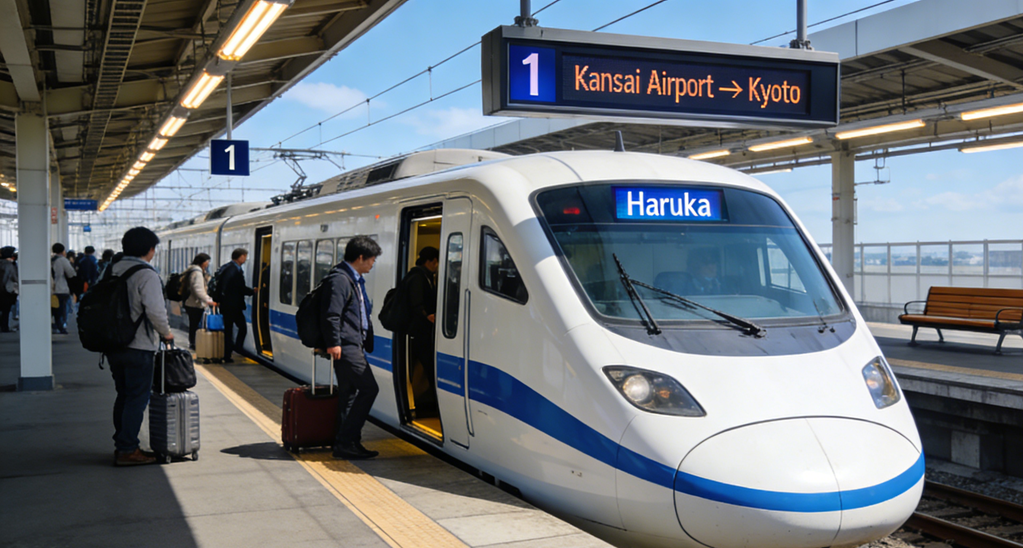
The JR Haruka limited express is the backbone of airport access to Kyoto. It's comfortable, has luggage racks, and delivers you to Kyoto Station in about 75 minutes. From there, you have several options to reach Kiyomizu-dera, but the most common for first-timers is the city bus. The bus stops "Kiyomizu-michi" and "Gojo-zaka" are just a 10-minute walk from the temple's main gate (though uphill). This route is simple, even with moderate luggage, as long as you avoid rush hour.
| Transport Option | Travel Time | Approximate Cost | Luggage Space | Best For |
|---|---|---|---|---|
| JR Haruka + City Bus | 2 hours | ¥3,530–4,130 (JR Pass covers train) | Good (train racks, bus can be tight) | JR Pass holders, general tourists |
| Nankai + Keihan + Walk | 2–2.5 hours | ¥1,750–2,000 | Poor (multiple transfers, stairs) | Backpackers, no luggage |
| Airport Bus + Taxi | 2 hours | ¥4,100–4,600 | Excellent (bus undercarriage, taxi trunk) | Families, heavy luggage |
How to Catch the Haruka at KIX
After clearing immigration, follow the signs for "Railways" to the second floor of the airport. The Kansai Airport Station is connected by a walkway. If you have a JR Pass voucher, head to the "Japan Rail Pass" exchange counter (Midori-no-madoguchi) – expect a 20–30 minute queue during peak hours. If you're buying a ticket, use the automated machines (English available). The Haruka usually departs from platforms 1–4. Board non-reserved cars if you don't have a reservation; they're usually fine outside of holiday seasons.
From Kyoto Station to Kiyomizu-dera by Bus
At Kyoto Station, follow signs for the "Bus Terminal" – it's on the north side (Karasuma exit). Go to bus stop D1 or D2 (platforms for buses #86, #100, #206). These buses all go to Kiyomizu-dera area. The ride takes about 15–20 minutes, but can stretch to 30 minutes during peak tourist hours (10:00–16:00) due to traffic on Higashiyama streets. Pay ¥230 when you exit (use IC card or cash). The bus announcements are in English. Get off at "Kiyomizu-michi" (closer to the temple approach) or "Gojo-zaka" (closer to the pottery streets). From either stop, it's a 10-minute uphill walk to the temple entrance. If you have luggage, this walk is painful; consider a taxi from Kyoto Station instead.
Reality Check: The Uphill Climb
The walk from Kiyomizu-michi bus stop to the temple is all uphill, with steps in places. I've watched tourists dragging roller bags up that slope, their faces a mix of determination and regret. If you have wheeled luggage, either store it at Kyoto Station (lockers are abundant) or take a taxi directly to your hotel. The bus is fine if you're carrying only daypacks. Many travel blogs gloss over this, but the hill is real. In summer, it's a sweaty ordeal; in winter, the steps can be icy.
Nankai + Keihan Route (The Scenic Alternative)
This route is beloved by travelers who want to avoid Kyoto Station's crowds or are staying near the Kamo River. It uses the Nankai Line from KIX to Namba (Osaka), then the Keihan Main Line to Kiyomizu-Gojo Station. From there, you can walk (20 minutes uphill) or take a short bus/taxi. It's cheaper than JR but requires more navigation and is not recommended with heavy luggage.
Step-by-Step: KIX to Kiyomizu-Gojo via Nankai & Keihan
Step 1: From Kansai Airport Station, take the Nankai Line airport express (not the limited express rapi:t, unless you want to pay extra) to Namba Station (45 minutes, ¥930). Follow signs for the Midosuji Subway Line. Step 2: Ride the Midosuji Line one stop from Namba to Yodoyabashi Station (¥190, 3 minutes). Exit and follow signs to the Keihan Line (connected). Step 3: At Yodoyabashi, board a Keihan Main Line limited express bound for Demachiyanagi. Get off at Kiyomizu-Gojo Station (50 minutes, ¥490). Total fare about ¥1,610. Alternative: From Namba, you can also walk to Kitahama Station (Keihan) via underground passage, skipping the subway fare.
From Kiyomizu-Gojo Station to the Temple
Kiyomizu-Gojo Station is on the east bank of the Kamo River. From the station, you have three options: 1) Walk – Head east on Gojo-dori, then turn north onto Higashiyama-dori. It's about 1.5 km (20 minutes) with a steady uphill gradient. 2) Bus – From the "Keihan Gojo" bus stop (just outside the station), take Kyoto City Bus #80, #86, #100, or #206 to "Kiyomizu-michi" or "Gojo-zaka" (5–10 minutes, ¥230). 3) Taxi – A short taxi ride costs about ¥1,000–1,500. For those with light luggage, the bus is fine. But if you're arriving during cherry blossom or autumn leaf season, the buses will be packed, and walking might actually be faster.
Who Should Choose This Route?
This route is ideal for: 1) Travelers without checked luggage. 2) Those staying near Gion or along the Keihan line. 3) Budget-conscious solo adventurers. 4) People who enjoy navigating urban train systems. It's not for anyone with mobility issues, large suitcases, or a low tolerance for stairs. The internet sometimes promotes this as a "local secret," but the reality is you'll be hauling your bag through several station corridors. I've done it with a backpack and it was fine; with a roller bag, I'd take the bus.
A Common Example of a Real-Life Mistake: You arrive at KIX with a 25kg suitcase and a carry-on. You've read about the cheap Nankai+Keihan route. At Namba, you face a maze of passages and escalators. Your suitcase gets stuck in a ticket gate. By the time you reach Yodoyabashi, you're exhausted and sweaty. You board the Keihan train, but there's no luggage space, so your suitcase blocks the aisle. You arrive at Kiyomizu-Gojo, then face a 20-minute uphill drag to your ryokan. You saved ¥1,500 but lost two hours and your dignity. Take the bus next time.
Airport Limousine Bus + Local Transport
The Kansai Airport Limousine Bus to Kyoto Station is a stress-free option, especially for families and those with heavy luggage. Buses depart from each terminal every 20–40 minutes. The ride takes about 90 minutes (depending on traffic) and drops you at the Kyoto Station Hachijo Exit bus terminal. From there, you can take a city bus, taxi, or even walk (not recommended). The bus has underfloor luggage storage, so you don't have to wrestle with bags on trains.
Bus Details: Schedules and Tickets
Bus tickets cost ¥2,600 for adults, ¥1,300 for children. You can buy them at vending machines near the bus stops or at the counter inside arrivals. The first bus from KIX departs around 6:30 AM, the last around 11:00 PM. During peak hours, buses fill up; it's wise to buy a ticket for a specific departure time. The buses are comfortable with reclining seats and restrooms. Note: Traffic on the Hanshin Expressway can be heavy, especially on Friday evenings and holiday weekends. Add 20–30 minutes buffer during those times.
From Kyoto Station to Kiyomizu-dera: The Smart Move
Once at Kyoto Station, you have the same options as after the Haruka: city bus or taxi. But because you're already on a bus, switching to another bus might feel seamless. However, the city buses from Kyoto Station to Higashiyama are notoriously crowded. If you have luggage, I strongly recommend taking a taxi from the taxi stand at the Hachijo Exit. The fare to the Kiyomizu-dera area is about ¥1,500–2,000 and takes 15 minutes. Split among 2–3 people, it's a small premium for door-to-door service. For solo travelers with a backpack, the city bus is fine – just be prepared to stand and hold your bag tight.
Taxi & Private Transfer: Comfort at a Price
Taxi from Kansai Airport to Kiyomizu-dera
A taxi from KIX to Kiyomizu-dera is a luxury few need. The metered fare, including expressway tolls, ranges from ¥35,000 to ¥45,000 (about $230–300). The trip takes 90–120 minutes depending on traffic. Late-night surcharges (after 10 PM) add 20–30%. If you're in a group of 4, the per-person cost drops to ¥9,000–11,000, which is comparable to a train ticket plus a nice dinner. For elderly travelers, those with serious mobility issues, or VIPs on expense accounts, this is a viable option. The taxi will drop you right at the temple's parking area or your hotel, eliminating all stairs and transfers.
Private Transfer Services
Pre-booked private transfers (e.g., MK Taxi, Yasaka, or international booking platforms) offer fixed prices around ¥40,000 for a sedan. The driver meets you at arrivals with a name sign, helps with luggage, and handles tolls. Some companies offer English-speaking drivers. While pricey, this removes all uncertainty. For families with young children, this can be worth every yen after a long flight. I've used this service when traveling with my elderly parents – the peace of mind was priceless.
Shared Shuttle Options
Some companies operate shared vans from KIX to Kyoto City for around ¥4,000–5,000 per person. However, they typically drop passengers at major hotels in central Kyoto, not specifically at Kiyomizu-dera. You'd then need a local taxi. It's a middle ground but adds time. I'd only recommend this if your hotel is one of the drop-off points and you're on a tight budget but have too much luggage for trains.
Detailed Route: Kansai Airport to Kiyomizu-dera Station-by-Station
Here are the station-by-station breakdowns for the two main rail routes. This helps you track your progress and know when to get off.
JR Route: KIX → Kyoto Station → Bus Stop
- Kansai Airport Station – Board JR Haruka limited express.
- Hineno Station (pass).
- Otori Station (pass).
- Kansai Airport Line continues...
- Tennoji Station (stop).
- Shin-Imamiya Station (pass).
- Shin-Osaka Station (stop).
- Kyoto Station – Alight. Transfer to bus terminal.
- Bus stop D1/D2 – Board bus #86, #100, or #206.
- Shichijo Ohashi (first bus stop after station).
- Kawaramachi Shijo (for Gion).
- Gion (bus stop).
- Kiyomizu-michi (bus stop) – Get off here.
- Walk 10 min uphill to temple.
Keihan Route: KIX → Namba → Yodoyabashi → Kiyomizu-Gojo
- Kansai Airport Station – Board Nankai Line airport express.
- Izumisano Station.
- Kishiwada Station.
- Sakai Station.
- Shin-Imamiya Station (Nankai).
- Namba Station – Alight, transfer to Midosuji Subway (or walk to Kitahama).
- Yodoyabashi Station (Midosuji one stop) – Transfer to Keihan Line.
- Kitahama Station (Keihan, if you walked from Namba).
- Temmabashi Station (Keihan).
- Kyobashi Station (Keihan).
- Shichijo Station (Keihan).
- Kiyomizu-Gojo Station – Alight.
- Walk east or take bus to temple.
Kansai Airport to Kiyomizu-dera Route Map
The map below shows the route from Kansai Airport to Kiyomizu-dera. The JR route goes via Kyoto Station, while the Keihan route goes via Osaka and along the Kamo River. Both converge near the temple area.
View the route on Google Maps: KIX to Kiyomizu-dera.
The distance from Kansai Airport to Kiyomizu-dera is about 105 km. The journey takes you from the artificial island, through Osaka's urban core, and into the hills of eastern Kyoto.
Fares, IC Cards, and Tickets
| Transport Option | Base Fare | Limited Express / Supplements | Total Cost (Approx.) | IC Card OK? |
|---|---|---|---|---|
| JR Haruka + City Bus | ¥1,870 (KIX-Kyoto) + ¥230 (bus) | ¥1,530 (Haruka limited express) | ~¥3,630 (JR Pass covers train) | No (need paper ticket for Haruka) |
| Nankai + Midosuji + Keihan + Bus | ¥930 + ¥190 + ¥490 + ¥230 | None (use rapid services) | ~¥1,840 | Yes (tap at all gates) |
| Airport Bus + City Bus | ¥2,600 + ¥230 | None | ¥2,830 | Bus: no (buy ticket), city bus: yes |
| Taxi | Meter + Tolls | N/A | ¥35,000–45,000 | No (cash/card) |
IC Cards: ICOCA, Suica, and You
IC cards are the most convenient way to pay for individual trips. You can buy an ICOCA at Kansai Airport (vending machines near JR ticket gates) for ¥2,000 (includes ¥500 deposit). It works on Nankai, Osaka Metro, Keihan, Hankyu, and Kyoto buses. For the JR Haruka, you cannot use IC card alone; you must buy a limited express ticket (available at machines). However, you can use your IC card for the local JR train from Kyoto to other destinations. For the Keihan route, just tap in and out – it automatically calculates the fare. The digital Suica on Apple Wallet works exactly the same and can be recharged with a credit card. This is a game-changer for iPhone users.
JR Pass Considerations
If you have a Japan Rail Pass, the JR Haruka from KIX to Kyoto Station is covered. You must exchange your voucher at the JR Ticket Office at KIX (long queues possible). Reserve a seat on the Haruka for free – it guarantees you a spot and luggage space. The JR Pass does not cover city buses, so you'll need to pay ¥230 separately (cash or IC card). Some travelers activate their JR Pass later and buy a single Haruka ticket to save a day of pass usage. Calculate based on your itinerary.
A Common Example of a Real-Life Mistake: You have a JR Pass but arrive at KIX at 8:00 AM. You queue 40 minutes to exchange it. You then rush to the Haruka, but all reserved seats are taken, so you stand in the non-reserved car for 75 minutes. You could have just bought a single Haruka ticket (¥3,630) and saved your JR Pass for later long-distance travel. Always weigh the value of queuing vs. buying a ticket.
Traveler Experience: The First Glimpse of Kyoto
Landing at Kansai Airport is usually the start of something magical. After the long flight, the efficient Japanese transport system is a relief. Signs are clear, trains run on time, and everything feels orderly. But the journey to Kiyomizu-dera can be your first test. The choice of route sets the tone for your trip. Will you arrive relaxed, or frazzled from navigating Osaka's subway labyrinth?
The JR Haruka Experience
Most first-timers gravitate to the JR Haruka because it's the most advertised. The train itself is comfortable, with large windows and luggage racks. Watching the urban landscape shift from industrial to residential to the outskirts of Kyoto is calming. The arrival at Kyoto Station is awe-inspiring – the massive structure, the crowds, the futuristic architecture. But then you face the bus terminal. It's a organized chaos. Finding the right bus stop is easy with signs, but the buses themselves can be packed. I've seen tourists with suitcases struggle to board, blocking the aisles. If you're nimble and have a small bag, it's doable. If not, consider that taxi.
The Keihan Route Experience
Choosing the Keihan route is for the more adventurous. Namba Station is a dizzying maze of tunnels and exits. But once you find the Keihan line, the ride along the Kamo River is genuinely scenic. You'll see the river, the mountains, and glimpses of temples. Getting off at Kiyomizu-Gojo, you emerge into a quiet neighborhood. The walk up to the temple is steep but charming, passing traditional shops and machiya houses. If you have no luggage, this is a lovely introduction. If you do have luggage, it's a slog.
The Reality of the Uphill
No blog post can fully convey the slope of the streets leading to Kiyomizu-dera. Even from the bus stop, it's a steady incline. The main approach (Chawan-zaka) is lined with steps. Locals glide past, but tourists huff and puff. In summer, the heat is oppressive; in winter, watch for ice. My advice: wear comfortable shoes, travel light, and take breaks at the shops. It's part of the experience, but know what you're signing up for.
A Common Example of a Real-Life Mistake: You and your partner arrive at Kyoto Station after a 12-hour flight. You decide to "save money" by taking the bus to Kiyomizu-dera. You drag your two large suitcases onto the crowded bus, earning annoyed glances. You get off at Kiyomizu-michi and face the hill. Your suitcase wheels catch on every cobblestone. Twenty minutes later, you reach your ryokan, exhausted and sweaty. You could have taken a taxi for ¥2,000 and arrived fresh. Know your limits and budget for comfort.
Practical Tips & Advice for KIX to Kiyomizu-dera
- With large luggage: Take the Airport Limousine Bus to Kyoto Station, then a taxi to your accommodation. Avoid the Keihan route at all costs.
- First-time visitor tip: Download Google Maps offline for Kyoto. It works even without data and shows bus stops and train platforms.
- Late night arrival (after 10:00 PM): The last Haruka is around 10:30 PM. After that, take the limousine bus (last around 11:00 PM) then a taxi. Or just take a taxi all the way (expensive).
- Early morning departure to KIX: The first Haruka from Kyoto departs ~6:30 AM. If your flight is before 9:30 AM, consider staying near Kyoto Station or KIX the night before.
- With kids: The bus+taxi combo is easiest. If using trains, look for elevators – they exist but are often hidden.
- Cost-saving tip: The Nankai+Keihan route is cheapest but only suitable for backpackers. For most, the bus+city bus is better value.
- Time-saving tip: JR Haruka is fastest. Add 30 minutes for bus transfer at Kyoto Station.
- Group travel (3-4 people): Compare taxi cost (¥35,000–45,000) with train tickets. Split 4 ways, a taxi is ¥9,000–11,000 per person, which is more than train but offers door-to-door service. Decide based on budget.
- Buying tickets: For Haruka, use vending machines to avoid queues. For bus, buy at the counter or machine. Have cash ready.
- Weekend vs weekday: Kyoto buses are packed every day, but weekends are worse. If you must take the bus, avoid 10:00–16:00.
- Hotel location: If your hotel is in Gion or Higashiyama, the Keihan route might be closer. Check a map before deciding.
- Return trip: From Kiyomizu-dera to KIX, take a taxi to Kyoto Station (¥1,500–2,000), then Haruka or bus. Allow 3 hours total.
- Mobile apps: "Japan Travel" by Navitime, Google Maps, and "HyperDia" are reliable. "JapanTaxi" app can hail cabs.
- Rainy season (June-July): Avoid walking up the hill in the rain – it's slippery. Taxi is your friend.
- Hot season (August): The hill is brutal. Carry water, wear a hat, and consider a taxi if you're not acclimated.
- SIM cards/WiFi: Rent a pocket WiFi at the airport or buy a data SIM at 7-11. Essential for navigation.
- Language: Most signs are in English. Bus drivers have route maps in English. Don't be afraid to ask station staff.
- Safety: Japan is extremely safe. Keep your belongings close, but don't stress.
- Bargaining: Doesn't exist. Pay the fare shown.
- Tipping: Not practiced. Don't tip taxi drivers or bus drivers.
Map showing route from Kansai Airport to Kiyomizu-dera via Kyoto Station and the Keihan corridor.
Frequently Asked Questions: Kansai Airport to Kiyomizu-dera
What is the best way to get from Kansai Airport to Kiyomizu-dera?
For most travelers: Take the JR Haruka limited express to Kyoto Station (75 min, ¥3,300–3,900, free with JR Pass), then transfer to city bus #86, #100, or #206 to "Kiyomizu-michi" or "Gojo-zaka" bus stop (15–20 min, ¥230). Total time about 2 hours. This balances speed, cost, and simplicity. If you have a JR Pass, the train is free. For those staying near the Keihan line, the Nankai + Keihan route via Osaka is also possible but involves more transfers and stairs.
Is there a direct bus from Kansai Airport to Kiyomizu-dera?
No, there is no direct bus from Kansai Airport to Kiyomizu-dera. The closest you can get is the Airport Limousine Bus to Kyoto Station (¥2,600, 90 min). From Kyoto Station, you need to take a local bus or taxi to reach the temple area. Some overnight buses might go to Kyoto but they don't stop at Kiyomizu-dera.
How far is Kansai Airport from Kiyomizu-dera?
Kansai Airport (KIX) is approximately 105 kilometers (65 miles) from Kiyomizu-dera. The travel time by train and bus is about 2 hours. By taxi, the distance is similar but takes 90–120 minutes depending on traffic, with a cost of ¥35,000–45,000 including tolls.
How much is a taxi from Kansai Airport to Kiyomizu-dera?
A taxi from Kansai Airport to Kiyomizu-dera costs ¥35,000–45,000 (approx. $230–300 USD). This includes highway tolls and potential late-night surcharges. The ride takes 90–120 minutes. Only recommended for groups of 3–4 splitting the cost or travelers with mobility issues.
Can I use the JR Pass to get to Kiyomizu-dera?
Yes, the JR Pass covers the JR Haruka from KIX to Kyoto Station. From Kyoto Station, the city bus to Kiyomizu-dera is not covered by the JR Pass, so you'll need to pay the ¥230 bus fare separately or use your IC card. Alternatively, you can walk from Kyoto Station (about 50 minutes uphill) or take a short taxi (¥1,500–2,000).
What is the cheapest way from Kansai Airport to Kiyomizu-dera?
The cheapest combination is: Nankai Line from KIX to Namba (¥930) + Midosuji Subway to Umeda (¥190) + Hankyu Kyoto Line to Kawaramachi (¥410) + walk/bus to Kiyomizu-dera. Total about ¥1,750. However, this involves 4 transfers and lots of stairs. A more budget-friendly option with fewer hassles is the Airport Limousine Bus to Kyoto Station (¥2,600) + city bus (¥230) = ¥2,830. The bus is the best value for most people.
Is it easy to get to Kiyomizu-dera from Kyoto Station by bus?
Yes, it's straightforward. From the Kyoto Station bus terminal (platform D1 or D2), take bus #86, #100, or #206. They run frequently (every 5–10 minutes). Get off at 'Kiyomizu-michi' or 'Gojo-zaka' stop. The ride takes 15–20 minutes, but can be longer during peak tourist seasons when traffic jams occur. Buses get very crowded; if you have large luggage, it's better to take a taxi from Kyoto Station.
What is the best option for late-night arrival at KIX to reach Kiyomizu-dera?
If you arrive after 10:00 PM, trains become infrequent. The last Haruka departs around 10:30 PM. After that, your options are limited to taxis (¥35,000+) or overnight buses (which may not align with your arrival). A practical solution: take the last limousine bus to Kyoto Station (around 11:00 PM) and then a taxi from Kyoto Station to your accommodation near Kiyomizu-dera (¥2,500–3,500).
How do I get from Kansai Airport to Kiyomizu-dera using Keihan line?
Take the Nankai Line from KIX to Namba (¥930, 45 min). Transfer to the Osaka Metro Midosuji Line to Yodoyabashi or Kitahama (¥190, 5 min). Then board the Keihan Main Line limited express to 'Kiyomizu-Gojo' Station (¥490, 50 min). From Kiyomizu-Gojo, it's a 15–20 minute uphill walk to the temple, or you can take a taxi (¥1,000–1,500) or bus #80, #86, #100, #206 from Gojo Keihan-mae stop. This route is good if you're staying near the river or want to avoid Kyoto Station crowds.
Are there luggage lockers near Kiyomizu-dera?
Yes, there are coin lockers at Kiyomizu-michi bus stop area and near Gojo-zaka, but they are limited and fill up quickly, especially by mid-morning. It's safer to store luggage at Kyoto Station (large locker bank) before heading to the temple, or use a luggage delivery service (takkyubin) from the airport to your hotel.
Can I use an IC card (ICOCA/Suica) for the whole trip?
Yes, you can use an IC card for almost all legs: Nankai, Osaka Metro, Hankyu, Keihan, and Kyoto city buses. For the JR Haruka, you need a separate limited express ticket (IC card only covers the base fare). The simplest is to buy an ICOCA at KIX and load it with money. It works on buses and trains throughout Kansai.
What is the best route for someone with large luggage?
The most luggage-friendly route is the Airport Limousine Bus to Kyoto Station (undercarriage storage) followed by a taxi to your accommodation near Kiyomizu-dera. This avoids stairs and crowded buses. If you prefer trains, the JR Haruka to Kyoto Station and then a taxi is also manageable. Avoid the Nankai+Keihan route with large suitcases due to multiple transfers and limited elevator access.