Quick Answer
You cannot legally "live" in Tokyo on a tourist visa, but you can stay temporarily for up to 90 days for tourism purposes. Tokyo tourist visa regulations allow stays of 15, 30, or 90 days depending on nationality, with no extensions permitted. Tourist visa limitations in Tokyo prohibit work, study, or establishing residence. Costs for 90-day Tokyo stay range from $3,000-$12,000+ (¥450,000-1,800,000+ JPY) depending on accommodation style and lifestyle. For longer Tokyo stays, consider proper visas like Working Holiday, Student, or Work visas instead of attempting to live in Tokyo on a tourist visa.
All USD amounts are approximate conversions based on an average exchange rate of 1 USD ≈ 150 JPY. Actual costs may vary.
Legal Reality: Tokyo Tourist Visa Limitations & Regulations
Living in Tokyo on a tourist visa is legally prohibited under Japan's Immigration Control and Refugee Recognition Act. Tourist visas and visa waiver programs are designed specifically for temporary tourism, short visits, and sightseeing purposes only. Attempting to establish residence, work, or study long-term violates visa conditions and can result in deportation, bans, fines, and future immigration problems. This guide explains the legal boundaries of Tokyo tourist stays, practical alternatives for longer residence, and how to enjoy extended Tokyo visits without violating Japanese immigration law.
| Visa Type | Maximum Stay | Permitted Activities | Prohibited Activities | Extension Possible? |
|---|---|---|---|---|
| Tourist Visa / Visa Waiver | 15, 30, or 90 days | Tourism, visiting friends/family, short courses <90 days, business meetings | Work (paid/unpaid), long-term study, establishing residence, income activities | No (except emergencies) |
| Working Holiday Visa | 6-12 months | Travel, temporary work to fund stay, short study, cultural exchange | Adult entertainment work, permanent employment, overstaying | Sometimes to 18 months |
| Student Visa | 3 months to 4+ years | Study at accredited institutions, part-time work (28 hrs/week max) | Full-time employment, work outside permitted hours, visa category abuse | Yes, with school enrollment |
| Work Visa | 1-5 years renewable | Employment with sponsoring company, dependent family, limited business | Work outside sponsored company, unemployment beyond 3 months | Yes, with continued employment |
| Designated Activities (Digital Nomad) | 6 months (proposed) | Remote work for foreign employer, tourism, cultural activities | Employment with Japanese companies, certain business activities | Unclear, new visa category |
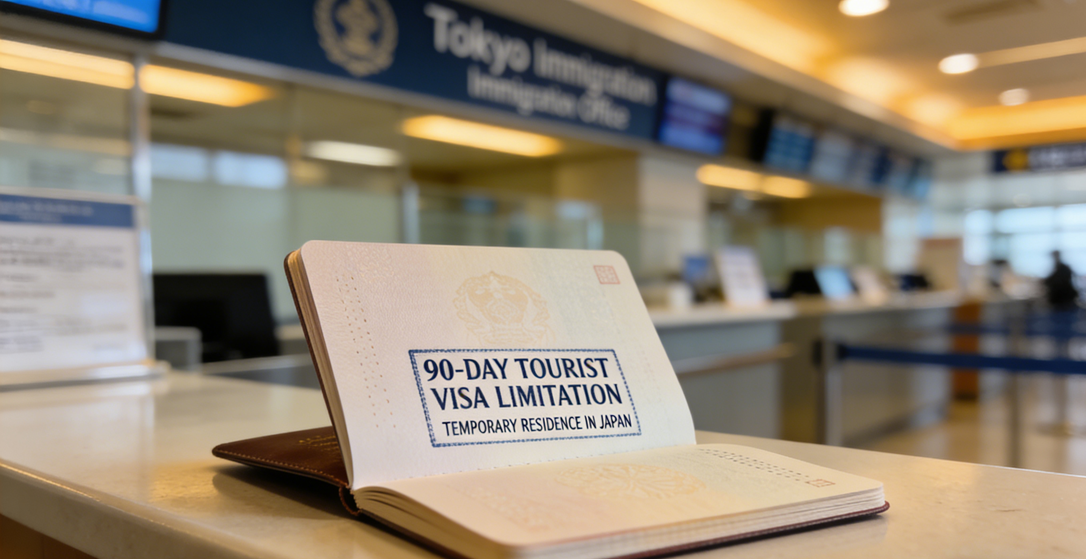
Japanese Immigration Law: Tourist Visa Intent vs Reality
Japanese immigration authorities carefully distinguish between "temporary visitor" (tourist) and "long-term resident" statuses. The Immigration Control Act Article 2-2 defines "temporary visitor" as someone entering for tourism, recreation, sports, visiting relatives, sightseeing, attending conferences, or other similar purposes. Key legal principles: Tourist visa holders cannot engage in activities that generate income, cannot establish a residence, and must maintain a residence abroad to return to. Immigration officers at Narita, Haneda, and other ports of entry assess true intent of Tokyo visit based on: return ticket, accommodation bookings, financial means, employment ties abroad, and previous travel history.
Common Misconceptions About Tokyo Tourist Visa Living
Many foreigners misunderstand Tokyo tourist visa regulations: Myth 1: "I can stay 90 days, leave for 1 day, and return for another 90 days" - This is visa abuse and may lead to denial. Myth 2: "Working online for a foreign company is okay" - Any work activity violates tourist visa conditions. Myth 3: "I can study Japanese full-time on a tourist visa" - Only short courses under 90 days are permitted. Myth 4: "Getting a part-time cash job won't be detected" - Working illegally risks deportation and 5-year ban. Myth 5: "I can extend my tourist visa easily" - Extensions are only for emergencies with documentation.
Tokyo Tourist Visa Duration: Maximum Stay & Limitations
Tourist visa duration in Tokyo depends on nationality: 90-day visa-free entry for 68 countries including US, UK, Canada, Australia, EU nations. 30-day visa-free entry for some countries like UAE, Mexico. 15-day visa-free entry for others like Thailand, Philippines. Some nationals require pre-arranged tourist visas. The 90-day maximum stay cannot be extended except for documented emergencies. The unofficial "180-day per year rule" is often enforced - spending more than 6 months in Japan within 12 months as a tourist may raise immigration concerns about Tokyo tourist visa abuse and living illegally.
Tourist Visa Duration by Nationality 2025
| Nationality Category | Visa Requirements | Maximum Stay | Extension Possible? | Multiple Entry Allowed? |
|---|---|---|---|---|
| United States, Canada, UK, Australia, EU | Visa-free (Temporary Visitor) | 90 days | No (emergencies only) | Yes, with scrutiny |
| Mexico, UAE, Argentina | Visa-free (Temporary Visitor) | 30 days | No | Yes |
| Thailand, Philippines, Indonesia | Visa-free (Temporary Visitor) | 15 days | No | Yes |
| China, Russia, India | Tourist visa required | 15-90 days (varies) | Rarely | Sometimes with visa |
| Working Holiday Countries | Working Holiday Visa required | 6-12 months | Sometimes to 18 months | Yes, with visa |
Calculating Your Maximum Legal Stay in Tokyo
To calculate your maximum legal Tokyo stay on tourist status: 1. Determine your visa-free period (usually 90 days). 2. Count from entry stamp date to exit date. 3. Remember: Day of arrival counts as Day 1. 4. You must depart by 23:59 on final day. Example: Entry March 1 = Must depart by May 29 (90 days). Overstaying even 1 day violates immigration law. The 6-month rule calculation: Immigration unofficially tracks cumulative days in Japan. If you stay 90 days, leave 1 day, return 90 days = 180 days in 12 months, which may trigger questioning about living in Tokyo on tourist visa illegally. Keep records of entry/exit dates and be prepared to explain travel patterns.
Cost Breakdown: 90-Day Tokyo Stay on Tourist Visa 2025
Living costs for 90 days in Tokyo on a tourist visa range from $3,000-$12,000+ (¥450,000-1,800,000+ JPY) depending on accommodation style, dining preferences, and activities. Unlike residents, tourists face higher short-term accommodation rates, cannot access long-term rental discounts, and pay tourist prices for many services. Budget categories include: short-term accommodation in Tokyo (largest expense), daily food costs, transportation expenses, activities and entertainment, and travel insurance requirements. This comprehensive breakdown helps plan your Tokyo tourist budget for 90 days without financial surprises.
90-Day Tokyo Tourist Budget: Budget to Luxury
| Expense Category | Budget Traveler (90 days) | Mid-Range Traveler (90 days) | Comfortable Experience (90 days) |
|---|---|---|---|
| Accommodation | $1,800-$2,700 (¥270,000-405,000 JPY) Share house, capsule, budget guesthouse |
$3,600-$5,400 (¥540,000-810,000 JPY) Business hotel, monthly apartment, Airbnb |
$6,300-$9,000+ (¥945,000-1,350,000+ JPY) Serviced apartment, hotel, luxury Airbnb |
| Food & Dining | $900-$1,350 (¥135,000-202,500 JPY) Convenience stores, cooking, cheap restaurants |
$1,800-$2,700 (¥270,000-405,000 JPY) Mix of cooking and mid-range restaurants |
$3,600-$5,400+ (¥540,000-810,000+ JPY) Regular dining out, nice restaurants |
| Transportation | $270-$450 (¥40,500-67,500 JPY) Trains, buses, occasional taxi |
$450-$720 (¥67,500-108,000 JPY) Trains, taxis, regional travel |
$900-$1,800+ (¥135,000-270,000+ JPY) Taxis, Shinkansen trips, car rental |
| Activities & Entertainment | $450-$900 (¥67,500-135,000 JPY) Free sights, temples, parks, some paid attractions |
$900-$1,800 (¥135,000-270,000 JPY) Museums, tours, cultural experiences |
$1,800-$3,600+ (¥270,000-540,000+ JPY) Guided tours, premium experiences, nightlife |
| Insurance & Medical | $150-$300 (¥22,500-45,000 JPY) Basic travel insurance |
$300-$450 (¥45,000-67,500 JPY) Comprehensive coverage |
$450-$900+ (¥67,500-135,000+ JPY) Premium insurance with high limits |
| Communication | $90-$180 (¥13,500-27,000 JPY) Pocket WiFi or SIM card |
$180-$270 (¥27,000-40,500 JPY) Unlimited data plan |
$270-$450+ (¥40,500-67,500+ JPY) Multiple devices, high-speed data |
| Miscellaneous | $300-$600 (¥45,000-90,000 JPY) Souvenirs, toiletries, laundry |
$600-$900 (¥90,000-135,000 JPY) Shopping, services, extras |
$900-$1,800+ (¥135,000-270,000+ JPY) Substantial shopping, services |
| Total 90-Day Tokyo Budget | $3,960-$6,930 (¥594,000-1,039,500 JPY) | $8,130-$12,240 (¥1,219,500-1,836,000 JPY) | $14,220-$22,950+ (¥2,133,000-3,442,500+ JPY) |
| Monthly Average Cost | $1,320-$2,310 (¥198,000-346,500 JPY) | $2,710-$4,080 (¥406,500-612,000 JPY) | $4,740-$7,650+ (¥711,000-1,147,500+ JPY) |
Daily Tokyo Tourist Budget Scenarios
Tokyo daily budget on tourist visa varies dramatically: Ultra-budget: $40-60/day (¥6,000-9,000 JPY) - capsule hotels, convenience store meals, walking. Budget: $60-100/day (¥9,000-15,000 JPY) - hostel dorm, cheap restaurants, public transport. Mid-range: $100-200/day (¥15,000-30,000 JPY) - business hotel, mix of cooking/eating out, some taxis. Comfortable: $200-400/day (¥30,000-60,000 JPY) - nice hotel/Airbnb, regular restaurants, taxis. Luxury: $400+/day (¥60,000+ JPY) - luxury hotels, fine dining, private tours. Unlike residents, tourists pay premium for short-term accommodation and lack local cost-saving knowledge.
Tokyo Accommodation Options on Tourist Visa: Costs & Limitations
Finding accommodation in Tokyo on a tourist visa presents challenges: traditional apartments require 1-2 year leases, Japanese guarantors, and residence cards. However, multiple short-term housing options for Tokyo tourists exist: Business hotels ($60-150/¥9,000-22,500 JPY nightly), monthly furnished apartments ($1,200-3,000/¥180,000-450,000 JPY monthly), share houses ($500-1,200/¥75,000-180,000 JPY monthly), guesthouses ($800-1,800/¥120,000-270,000 JPY monthly), Airbnb (legally limited to 180 days/year per property), and weekly mansions. Each option has different minimum stays, registration requirements, and pricing structures for tourist visa holders in Tokyo.
Tokyo Short-Term Accommodation Comparison 2025
| Accommodation Type | Monthly Cost Range | Minimum Stay | Tourist Visa Friendly? | Pros & Cons |
|---|---|---|---|---|
| Business Hotel | $1,800-$4,500 (¥270,000-675,000 JPY) | 1 night | Yes, designed for tourists | + Easy booking, central locations - Expensive long-term, small rooms |
| Monthly Furnished Apartment | $1,200-$3,000 (¥180,000-450,000 JPY) | 1 month | Sometimes, requires passport | + More space, kitchen facilities - Higher deposit, limited availability |
| Share House / Guesthouse | $500-$1,200 (¥75,000-180,000 JPY) | 1 week-1 month | Yes, popular with tourists | + Social, flexible, utilities included - Shared facilities, less privacy |
| Airbnb / Vacation Rental | $1,500-$3,500 (¥225,000-525,000 JPY) | Varies, often 3+ nights | Yes, but legally complex | + Entire place, home amenities - 180-day limit, registration required |
| Capsule Hotel | $900-$1,800 (¥135,000-270,000 JPY) | 1 night | Yes, but limited storage | + Very affordable, central - No privacy, small space |
| Weekly Mansion | $1,000-$2,000 (¥150,000-300,000 JPY) | 1 week | Usually, with passport | + Flexible, furnished, utilities included - More expensive than apartments |
| Temple/ Monastery Stay | $450-$900 (¥67,500-135,000 JPY) | Varies | Yes, unique experience | + Cultural experience, peaceful - Rules, curfews, limited availability |
Registration Requirements for Tokyo Tourist Accommodation
All Tokyo accommodation providers must register foreign guests with local authorities under the Hotel Business Law and Immigration Control Act. When checking in, you'll provide: passport (copied), visa status, intended address in Japan, occupation abroad. This information goes to local immigration via the accommodation. Important regulations: Airbnb hosts must register with local government, display license number, and limit rentals to 180 days/year maximum. Some municipalities ban or restrict short-term rentals. Always verify registration status before booking. Attempting to rent regular apartments in Tokyo on tourist visa usually fails because landlords require residence cards, Japanese guarantors, and proof of long-term visa status.
Legal Restrictions: What You Can & Cannot Do on Tokyo Tourist Visa
Permitted Activities on Tourist Visa in Tokyo
Legal activities on Tokyo tourist visa include: Tourism and sightseeing, Visiting friends and family, Attending business meetings (but not working), Participating in conferences or seminars, Short recreational courses (under 90 days) like cooking, language, cultural classes, Receiving medical treatment, Volunteering for non-profits if uncompensated and brief, Transiting through Japan to another destination. The key principle: activities must be temporary, not remunerative, and not constitute employment or long-term residence. You can engage in cultural exchange, attend events, and explore Japan as a genuine tourist.
Prohibited Activities on Tourist Visa in Tokyo
Illegal activities on Tokyo tourist visa that violate immigration law: Working for pay (including remote work for foreign companies), Unpaid work that would normally be paid, Studying at school for credit or long-term certification, Establishing residence or domicile, Engaging in activities that generate income, Operating a business, Providing services for payment, Working as a freelancer, Participating in paid performances or events, Working as an influencer/content creator for payment, Overstaying the permitted duration. Important note: Even if paid overseas, working while physically in Japan on a tourist visa violates your status of residence. Enforcement has increased for digital nomads and remote workers.
Gray Areas: Activities That May Raise Questions
Borderline activities for Tokyo tourist visa holders that may raise immigration concerns: Attending job interviews (generally permitted if not actually working), Networking for future employment, Receiving passive income (investments, royalties) while in Japan, Creating content for personal social media (if not monetized), Casual volunteering for room/board (risky), Short-term language study (under 90 days, not for credit), Remote work "on vacation" (technically illegal, enforcement varies), Property viewing for potential purchase. The immigration officer's discretion matters significantly. If activities appear to be establishing residency or working, entry may be denied even if technically within letter of law.
Legal Alternatives: Proper Visas for Longer Tokyo Stays
Instead of attempting to live in Tokyo illegally on a tourist visa, consider these legal alternatives: Working Holiday Visa (18-30 year olds from eligible countries, 6-12 months, can work to fund stay), Student Visa (enroll in language school or university, 3 months to 4+ years, limited work permitted), Work Visa (employment with Japanese company sponsorship, 1-5 years renewable), Designated Activities Visa (specific purposes including proposed digital nomad visa), Spouse/Dependent Visa (married to Japanese national or certain visa holders), Cultural Activities Visa (cultural studies, 3 months-3 years), Long-Term Resident Visa (specific circumstances). Each visa has requirements, processing times, and permitted activities.
Working Holiday Visa: Best Alternative for Young Travelers
Working Holiday Visa for Tokyo allows citizens of partner countries aged 18-30 (sometimes 18-35) to live and work in Japan for 6-12 months. Requirements vary by country but generally include: proof of sufficient funds ($2,000-$4,000/¥300,000-600,000 JPY), return ticket or equivalent funds, health insurance, clean criminal record, and primary purpose of holiday. Permitted activities: Any legal work to supplement travel funds (maximum 6 months with one employer in some cases), study, travel. Prohibited: Adult entertainment work, permanent employment. This visa provides legal Tokyo residence with work rights far beyond tourist visa limitations.
Student Visa: Language School Pathway to Tokyo Residence
Tokyo Student Visa through language school provides 1-2 years residence for Japanese study. Requirements: Enrollment in accredited language school, proof of financial support ($15,000-$20,000/¥2,250,000-3,000,000 JPY per year), educational background, clean record. Benefits: Legal residence, part-time work up to 28 hours/week, renewable, pathway to Work visa. Costs: Tuition $5,000-$8,000/year (¥750,000-1,200,000 JPY), living expenses $10,000-$15,000/year (¥1,500,000-2,250,000 JPY). This allows legal Tokyo living with study and work rights unlike tourist visa limitations. Many students transition to Work visas after language study.
Digital Nomad Visa: Proposed Alternative for Remote Workers
Japan's proposed Digital Nomad Visa (Designated Activities visa for remote workers) is expected 2024-2025. Expected requirements: Proof of remote employment or business outside Japan, minimum income ($68,000+/¥10,000,000+ JPY annually), health insurance, clean record. Expected benefits: 6-month stay (possibly extendable), multiple entry, bring family. This would provide legal Tokyo residence for remote workers currently violating tourist visa conditions. Until implemented, remote workers must use tourist visa (legally prohibited from working) or other visa options. Check latest immigration updates before planning.
Banking & Essential Services for Tokyo Tourist Visa Holders
Accessing banking services in Tokyo on a tourist visa is challenging: Japanese banks require residence cards, local addresses, and often Japanese phone numbers. However, tourists have alternatives: Japan Post Bank (JP Bank) may open limited accounts with passport and temporary address. Wise (formerly TransferWise) offers multi-currency accounts with Japanese bank details. International cards with no foreign transaction fees work widely. Prepaid cards like Waon, Suica (transit card) with payment function. Cash remains widely accepted. For mobile service in Tokyo on tourist visa: Tourist SIMs, pocket WiFi, or international roaming are best options without residence status.
Opening Bank Accounts in Tokyo: Tourist Limitations
| Bank/Service | Tourist Visa Eligible? | Requirements | Limitations | Best For |
|---|---|---|---|---|
| Major Japanese Banks (MUFG, Mizuho, SMBC) |
No | Residence card, Japanese address, phone number, often employment | Not available to tourist visa holders | Long-term residents only |
| Japan Post Bank (JP Bank) | Sometimes | Passport, temporary address, sometimes residence card | Limited services, may require 6+ month visa | Basic banking with passport only |
| Prepaid Cards (Waon, Nanaco, Suica) |
Yes | Passport for registration, cash to load | Spending limits, cannot receive transfers | Everyday spending without bank account |
| Wise Account | Yes | Online application, passport verification | Not a full Japanese bank account | Multi-currency, Japanese bank details for transfers |
| International Bank Account (Home country with int'l access) |
Yes | Existing account in home country | Foreign transaction fees, exchange rates | Accessing home funds while in Tokyo |
| Seven Bank (7Bank) | Sometimes | Passport, sometimes residence card | Basic account, limited services | ATM access, basic transactions |
Mobile Phone & Internet for Tokyo Tourists
Getting mobile service in Tokyo on tourist visa: Options include tourist SIM cards (1-90 days, data only or with calling), pocket WiFi rental (shareable, good for multiple devices), international roaming (expensive but convenient), and MVNO plans (if you can get residence card). Tourist SIM costs: $20-$50 (¥3,000-7,500 JPY) for 1-3 GB data, $50-$100 (¥7,500-15,000 JPY) for unlimited data monthly. Pocket WiFi: $60-$150/month (¥9,000-22,500 JPY) with pickup at airport. Important: Most Japanese phone plans require 2-year contracts and residence cards, making them inaccessible for tourist visa holders. Sakura Mobile, Mobal, and Ninja WiFi specialize in tourist services.
Insurance Requirements for Tokyo Tourist Visa Stays 2025
Health insurance for Tokyo tourist visa stays is essential but not legally required for entry. However, without insurance, medical bills can be catastrophic: $500-$1,000 (¥75,000-150,000 JPY) for clinic visit, $3,000-$10,000+ (¥450,000-1,500,000+ JPY) for hospitalization, $50,000+ (¥7,500,000+ JPY) for serious conditions. Japan's National Health Insurance is not available to tourists. Required coverage: $100,000+ medical, $300,000+ evacuation, COVID-19 coverage, trip cancellation, personal liability. Travel insurance costs for Tokyo: $100-$300 (¥15,000-45,000 JPY) for 90 days depending on age and coverage. Always carry insurance documents and understand claim procedures before needing care.
Medical Costs in Tokyo Without Insurance
Tokyo medical expenses without insurance can be financially devastating: Clinic visit: $50-$200 (¥7,500-30,000 JPY), Emergency room visit: $500-$2,000 (¥75,000-300,000 JPY), Hospitalization per day: $1,000-$3,000 (¥150,000-450,000 JPY), Ambulance: Free but hospital charges apply, Prescription medications: $20-$200 (¥3,000-30,000 JPY), Dental treatment: $100-$1,000 (¥15,000-150,000 JPY), Medical evacuation: $50,000-$100,000+ (¥7,500,000-15,000,000+ JPY). Important: Hospitals require payment upfront or guarantee of payment. Medical tourism insurance is essential for Tokyo tourist visa medical coverage during your stay.
Recommended Insurance Providers for Tokyo Tourists
Best travel insurance for Tokyo tourist visa stays: World Nomads (popular with travelers, adventure coverage), SafetyWing (designed for digital nomads, monthly subscription), IMG Global (comprehensive medical, popular with expats), Allianz (reliable, good coverage), Tokio Marine (Japanese provider, understands local system). Key coverage to verify: 1. COVID-19 treatment and quarantine, 2. Medical evacuation to home country, 3. Pre-existing conditions (if applicable), 4. Adventure activities if planned, 5. Minimum $100,000 medical, $300,000 evacuation. Read exclusions carefully - some exclude "high-risk" activities common in Japan like skiing or hiking.
Tokyo Visa Run Risks: Consequences & Alternatives
Tokyo visa runs (leaving Japan briefly to reset tourist stay) are risky and increasingly scrutinized. Immigration officials may deny re-entry if they suspect you're effectively living in Japan on tourist visa through consecutive stays. Factors considered: Time spent in Japan vs abroad, financial means, ties to home country, previous immigration history. The unofficial "180-day rule" means spending over 6 months in 12 months as a tourist may trigger questioning. Consequences of denied re-entry: Immediate deportation at your expense, 1-5 year ban from Japan, difficulty obtaining visas for other countries, permanent immigration record. Safer alternatives: proper visa application from home country.
Real Visa Run Experiences & Outcomes
Actual Tokyo visa run experiences vary: Some travelers successfully complete 2-3 consecutive 90-day stays, while others are denied on second return. Case 1: American leaves after 90 days, spends 2 weeks in Korea, returns without issue. Case 2: Australian spends 85 days, 1 week in Taiwan, questioned extensively but admitted. Case 3: Canadian spends 90 days, 5 days in Hong Kong, denied entry with 1-year ban. Patterns emerge: Short absences (under 2 weeks) raise red flags, multiple consecutive stays increase scrutiny, appearing like a resident (lots of luggage, local knowledge) triggers questions. Immigration's decision is discretionary with little appeal.
Legal Alternatives to Visa Runs for Tokyo Stays
Instead of risky visa runs, consider these legal alternatives for extended Tokyo stays: 1. Working Holiday Visa (if under 30/35 from eligible country), 2. Student Visa (language school or university), 3. Cultural Activities Visa (cultural study), 4. Designated Activities Visa (specific purposes), 5. Spouse/Dependent Visa (if married to eligible person), 6. Work Visa (employment sponsorship), 7. Long-Term Resident Visa (specific circumstances). Each requires application from home country with proper documentation. The process takes 1-3 months but provides legal residence without immigration risk.
Frequently Asked Questions: Tokyo Tourist Visa Living 2025
Can I legally live in Tokyo on a tourist visa?
You cannot legally "live" in Tokyo on a tourist visa, but you can stay temporarily for up to 90 days under Japan's visa waiver program or tourist visa. Tourist visas are specifically for tourism, short visits, and sightseeing—not for establishing residence, working, or long-term living. The maximum continuous stay is typically 90 days for most passport holders, after which you must leave Japan for an equal period before returning. Attempting to establish residence or work violates immigration conditions and risks deportation, bans, and fines.
How long can I stay in Tokyo on a tourist visa?
Most passport holders can stay 90 days in Tokyo on a tourist visa or visa waiver. Some nationalities receive 15 or 30-day stamps. The 90-day period cannot be extended while in Japan—you must leave and cannot return for another 90 days. Repeated 90-day stays with short exits may raise immigration concerns about visa abuse. The 180-day per year rule is unofficial but commonly referenced by immigration officers when assessing whether someone is trying to live in Japan on a tourist visa rather than visit as a tourist.
What can I do on a tourist visa in Tokyo?
On a Tokyo tourist visa you can: sightsee, attend short recreational courses (language, cooking, cultural classes under 90 days), participate in tourist activities, visit friends/family, conduct business meetings (but not work), attend conferences, receive medical treatment, and engage in other temporary tourism activities. You cannot: work (paid or unpaid), study long-term, establish residence, or engage in income-generating activities. The key distinction is between temporary tourism and activities that constitute residence or employment in Japan.
How much does it cost to live in Tokyo for 90 days on a tourist visa?
Living in Tokyo for 90 days on a tourist visa costs $4,500-$12,000+ (¥675,000-1,800,000+ JPY) depending on lifestyle. Budget breakdown: short-term accommodation $1,800-$5,400 (¥270,000-810,000 JPY), food $900-$2,700 (¥135,000-405,000 JPY), transportation $270-$900 (¥40,500-135,000 JPY), activities $900-$2,700 (¥135,000-405,000 JPY), insurance $300-$600 (¥45,000-90,000 JPY), plus miscellaneous expenses. Frugal travelers can manage with $3,000 (¥450,000 JPY) for 90 days using capsule hotels, convenience store meals, and free activities.
Can I rent an apartment in Tokyo on a tourist visa?
Renting a standard apartment in Tokyo on a tourist visa is extremely difficult. Most landlords require: valid residence status beyond 90 days, Japanese guarantor, employment verification, and bank accounts—all unavailable to tourist visa holders. Alternatives include: monthly furnished apartments ($1,200-$3,000/¥180,000-450,000 JPY), share houses ($500-$1,200/¥75,000-180,000 JPY), guesthouses ($800-$1,800/¥120,000-270,000 JPY), Airbnb (legal but limited to 180 days/year), and weekly mansions. These accept tourists with passport registration.
Can I work remotely for a foreign company while in Tokyo on a tourist visa?
Working remotely for a foreign company while in Tokyo on a tourist visa is technically illegal under Japanese immigration law. The Immigration Control Act prohibits any "work activities" while on a tourist visa, regardless of employer location or payment source. Enforcement varies, but if discovered, penalties include deportation, bans, fines, and future visa denial. Digital nomads should consider proper work visas, Working Holiday visas (if eligible), or Designated Activities visas for remote workers rather than risking immigration violations.
What happens if I overstay my tourist visa in Tokyo?
Overstaying a tourist visa in Tokyo has serious consequences: deportation at your expense, 1-5 year re-entry ban, detention in immigration facilities, fines up to ¥3,000,000 JPY ($20,000), and permanent immigration record affecting future visas. Overstay of 90+ days may result in 10-year ban. Immigration checks occur at departure, hotel registration, police interactions, and when extending other permits. Never overstay—leave before your permitted period ends. If emergency prevents departure, contact immigration immediately to request special permission.
Can I extend my tourist visa while in Tokyo?
Tourist visas and visa-free stays cannot be extended while in Tokyo except in specific circumstances: medical emergencies (with documentation), flight cancellations, or force majeure events. Even with valid reasons, extensions are granted sparingly and require Immigration Bureau approval. The standard 90-day period is fixed for most tourists. Those wanting longer stays must leave Japan and apply for proper visas (student, work, spouse, etc.) from their home country. Planning consecutive tourist stays as a "visa run" strategy risks entry denial.
Can I open a bank account in Tokyo with a tourist visa?
Opening a standard bank account in Tokyo with a tourist visa is nearly impossible. Japanese banks require: residence card (zairyu card) with 90+ day remaining validity, proof of address, phone number, and often employment. Tourist visa holders can sometimes open limited post office (JP Bank) accounts for basic transactions, but functionality is restricted. Alternatives: international bank accounts, Wise multi-currency accounts, or using credit cards with no foreign transaction fees. Most tourists use cash and international cards without Japanese bank accounts.
Can I study Japanese in Tokyo on a tourist visa?
You can study Japanese in Tokyo on a tourist visa for short-term courses under 90 days (typically 3-month intensive programs). For longer study, you need a Student visa. Many language schools offer tourist visa-friendly short courses. Important: Classes cannot exceed permitted stay, and you cannot receive a student residence card. For 3-6 month study, consider Cultural Activities visa (if eligible) or proper Student visa. Always verify with the school about visa requirements before enrolling to ensure compliance with immigration regulations.
What are alternatives to tourist visa for longer Tokyo stays?
Alternatives to tourist visa for longer Tokyo stays: Working Holiday visa (18-30 year olds from eligible countries, 6-12 months), Student visa (language school or university enrollment), Designated Activities visa (specific purposes like working remotely for foreign company), Work visa (sponsorship by Japanese employer), Spouse visa (married to Japanese national), and Long-Term Resident visa. Each has specific requirements, processing times, and permitted activities. Consult immigration professionals for proper visa selection based on your situation rather than attempting to live in Tokyo on a tourist visa.
What insurance do I need for living in Tokyo on a tourist visa?
Tourist visa holders in Tokyo need comprehensive travel medical insurance covering: medical emergencies ($100,000+ minimum), hospitalization, medical evacuation, COVID-19 coverage, trip cancellation, and personal liability. Japan's National Health Insurance isn't available to tourists. Recommended coverage: $50,000-100,000 medical, $300,000 evacuation, with premiums of $100-$300 (¥15,000-45,000 JPY) for 90 days. Many insurers offer Japan-specific policies. Hospital bills without insurance can exceed $10,000 (¥1,500,000 JPY) for serious conditions, making insurance essential.
Can I do a visa run from Tokyo to reset my tourist stay?
"Visa runs" from Tokyo (leaving briefly to reset the 90-day tourist stay) are increasingly scrutinized and risky. Immigration may deny re-entry if they suspect you're effectively living in Japan. Factors considered: frequency of visits, time spent in Japan vs abroad, financial means, and ties to home country. Successive 90-day stays with short exits may lead to questioning, entry denial, or temporary bans. The 180-day per year guideline is unofficial but often enforced. Consult immigration professionals before attempting consecutive stays rather than risking deportation and bans.